
Starting at $1,800
Cabinet refinishing in Boca Raton
Starting at $1,800. A new kitchen finish without new boxes: doors come off, get sprayed properly away from the room, and go back on the same frames.
Refinishing against replacing
If the boxes are solid and the layout works, replacing a kitchen is mostly paying to throw away carcasses that were fine. Refinishing keeps them, changes the finish and the hardware, and costs a fraction of a replacement for a result that reads as new from any normal distance. If the boxes are water damaged or the layout is the actual problem, we will say so rather than sell you a finish on a kitchen that needs a kitchen.
Sprayed, not brushed
Brush marks on a cabinet door are visible forever because you stand a foot away from them several times a day. Doors and drawer fronts come off, get labelled, cleaned, deglossed or sanded depending on the existing finish, and sprayed in a controlled space rather than in your kitchen. Frames are sprayed in place with the room masked off. The result is a uniform film with no texture in it.
The finish has to survive a kitchen
Cabinet doors get opened with wet hands, wiped with cleaners and hit with cooking grease. The coating has to cure hard enough to take that, which is a different requirement from a wall. It also needs proper cure time before the doors go back on and before you start using them normally, and we will tell you what that schedule is rather than rushing the rehang to finish a day early.
Colour, and what actually dates a kitchen
Most kitchens that read as dated are not the wrong colour, they are the wrong sheen and the wrong hardware. A flat, chalky finish on a door reads as old however current the colour is. We will talk through finish and hardware alongside colour, because changing all three costs very little more than changing one and makes a far bigger difference.
How the work runs
Step by step, in the order it happens
-
Document and label everything
Every door and drawer front is numbered and its position recorded before anything comes off, along with hinge positions and hardware. Cabinet doors are not interchangeable even when they look identical, and a door rehung in the wrong opening never sits right.
-
Remove, degrease, then degrease again
Kitchen cabinets carry years of cooking grease, and it is invisible. Any finish applied over it will fail, usually by peeling in sheets around the handles first. Degreasing is the single most important step and it gets done more than once.
-
Sand and fill
The existing finish is scuffed to give the primer a mechanical key, not sanded back to bare wood, which is neither necessary nor desirable on most cabinets. Dents and old hardware holes are filled if the hardware is changing.
-
Prime for the substrate you actually have
Raw wood, previously painted, thermofoil and laminate all want different primers. Getting this wrong is the second most common cause of failure after grease. Tannin rich woods such as oak also need a primer that blocks bleed through.
-
Spray the finish
Doors are sprayed off site or in a controlled area, flat, with the frames sprayed in place and masked. Spraying is what gives a cabinet the smooth factory look that brushing cannot, because brush marks in a high sheen enamel on a flat door are visible from across the room.
-
Cure, rehang, adjust
Cabinet enamels need real cure time before they take daily use. Doors go back on their numbered openings, hinges are adjusted so the reveals are even, and hardware goes on last.
What the price includes
- Numbering and documenting every door, drawer and hinge position
- Thorough degreasing, repeated, before any abrasion
- Primer chosen for the actual substrate, including bleed blocking on tannin rich woods
- Sprayed finish on doors, drawer fronts and frames
- Rehanging, adjusting reveals and refitting hardware
What it does not
- New doors, drawer boxes or cabinet carcasses
- Structural repair to failing boxes, or replacing damaged hinges and slides beyond adjustment
- Countertop, backsplash or appliance work
- Interior of the cabinet boxes, unless specifically agreed
Anything here can still be quoted. It is listed so nothing on the estimate is a surprise later.
What moves the number
- Door and drawer count, from a starting price of $1,800
- This is the real unit of work. A large kitchen is not bigger walls, it is more leaves to handle five times each.
- Current finish and substrate
- Previously painted wood is straightforward. Thermofoil, laminate and heavily lacquered factory finishes need different preparation.
- Grain
- Open grained woods such as oak show through a painted finish unless the grain is filled, which is extra work and worth deciding deliberately.
- Colour change
- Going white over a dark stained cabinet needs more coats and a blocking primer.
- Hardware
- Reusing existing holes is simple. New hardware with a different hole spacing means filling and redrilling every door.
Degreasing is not a preparation step, it is the job
The overwhelming majority of cabinet refinishing failures come down to grease. Cooking aerosolises oil, it settles on every surface in the kitchen, and it builds up invisibly over years, heaviest around the cooker and the handles. Paint does not bond to it. A cabinet that looks perfect on handover and starts peeling around the handles after four months was almost certainly not degreased properly, because the handles are exactly where hands and grease concentrate. It is unglamorous, it takes real time, and it is the difference between a five year finish and a five month one.
Why cabinets get sprayed
A cabinet door is a large flat panel in a high sheen finish, viewed from across a room in raking light from a window. That is the single most unforgiving combination for brush marks. Spraying lays a level film with no texture from the applicator, which is why factory cabinets look the way they do. It costs more in masking, setup and controlled space than brushing, and it is the reason a sprayed refinish reads as new cabinets rather than as painted ones.
Questions we get asked
- Is refinishing cabinets cheaper than replacing them?
- Substantially, because the boxes, the layout and the countertops all stay. It makes sense when the cabinet boxes are sound and you want a different finish rather than a different kitchen.
- How long does a kitchen take?
- Commonly around a week, driven by cure time between coats rather than by the coating itself. Doors are off for part of that, so the kitchen stays usable but open.
- Will I see the wood grain through the paint?
- On open grained woods such as oak, yes, unless the grain is filled first. That is extra work and worth deciding deliberately, because some people want the grain to read and some want a fully smooth panel.
- Why do painted cabinets peel around the handles?
- Almost always grease. Cooking oil settles invisibly on every surface and concentrates where hands go, and paint does not bond to it. Thorough repeated degreasing before any sanding is what prevents it.
What the work looks like
Cabinet Refinishing in practice
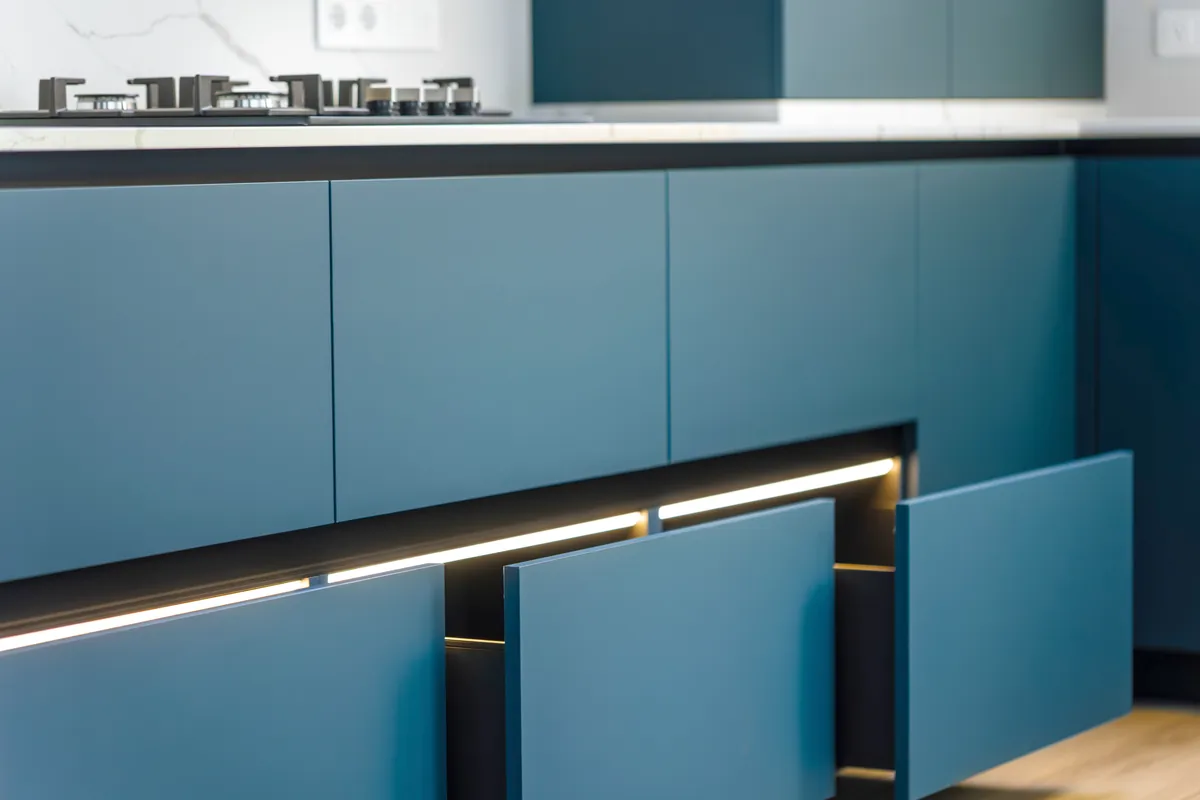
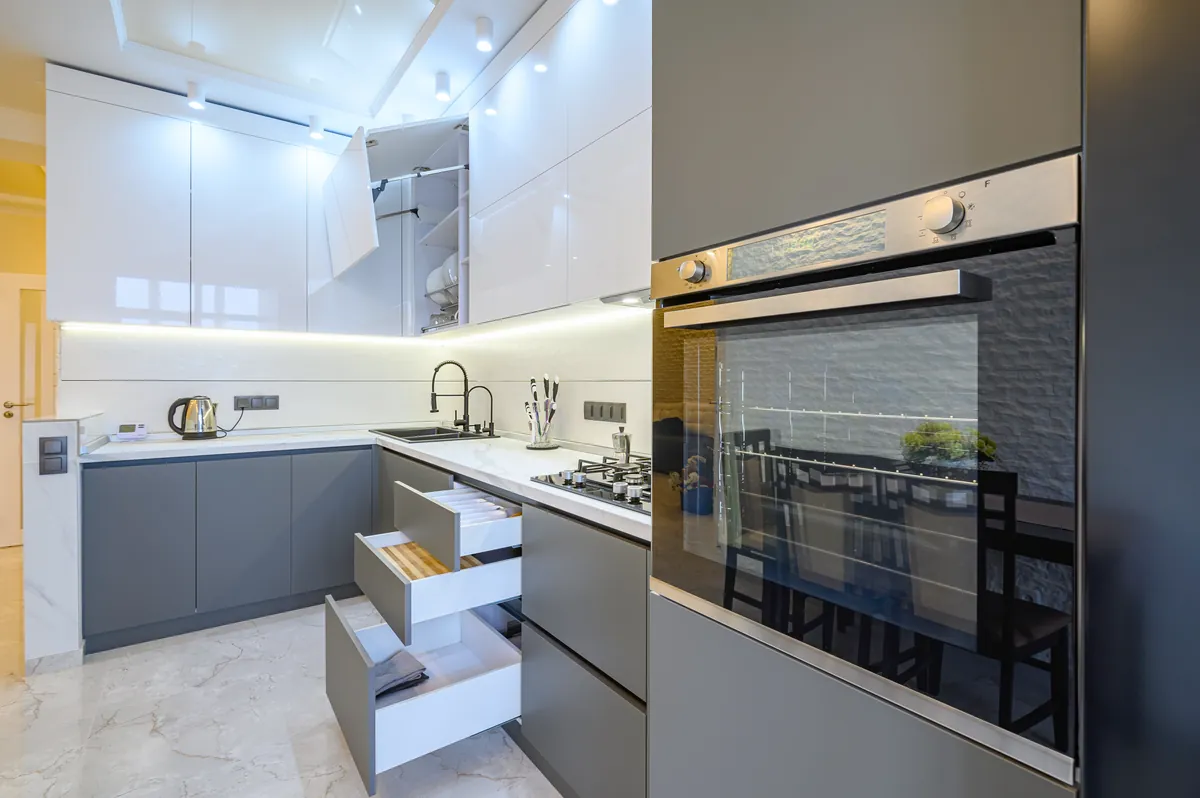
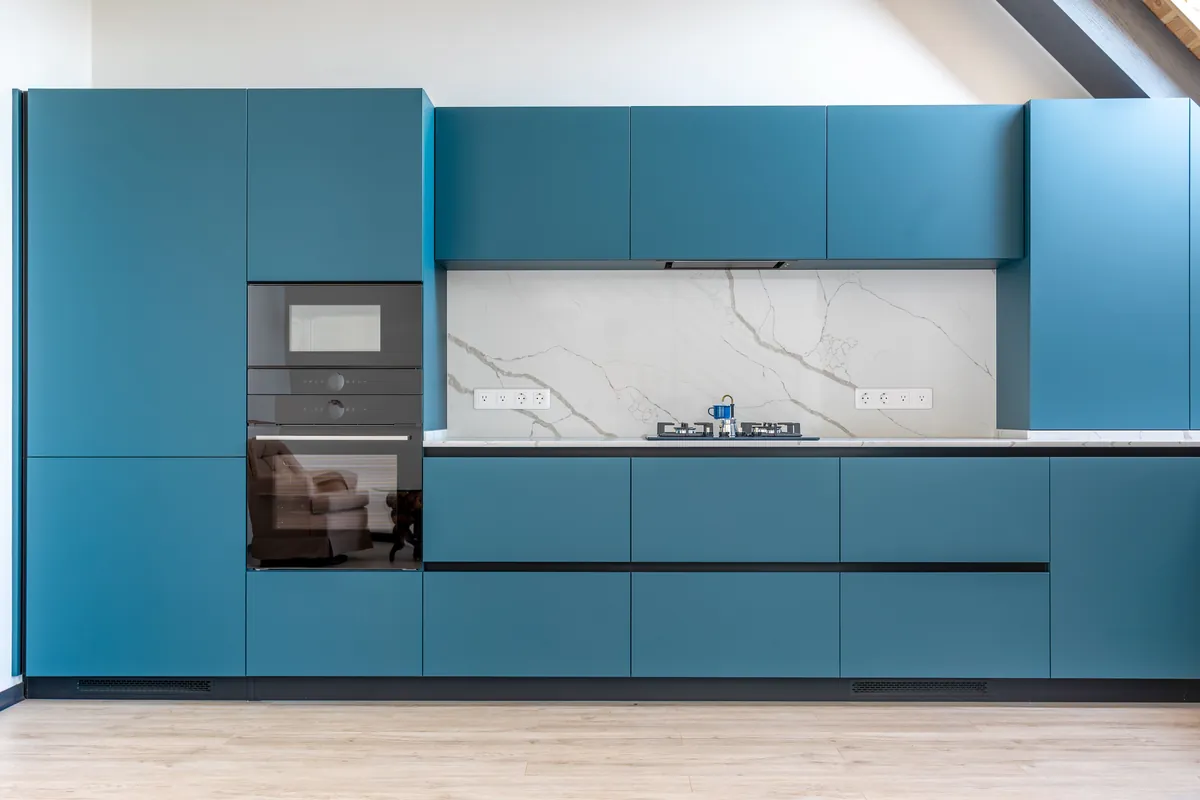
Illustrative photographs of this type of work. Our own completed jobs are on the recent work page.
Get the real number
Send the details and we will come measure, talk through the finish and put a written number in front of you before anything begins.


